Horses & Knowledge
Parts of a Horse Hoof
If you've ever wondered what's really going on inside and outside a horse's hoof, you're not alone — the hoof is one of the most fascinating and complex structures in all of horse anatomy. Farriers, vets, and experienced riders all know that healthy hooves are the foundation of a healthy horse. There's even an old saying in the horse world: 'No hoof, no horse.'
In this guide, we'll walk you through all the external parts of a horse hoof and the structures you can see on the underside, explain what each part does, and give you a free interactive labeling game to test yourself. Whether you're studying for a 4-H quiz, prepping for a riding lesson, or just horse-crazy curious — you're in the right place!
This page may contain affiliate links which may earn a commission.
Interactive Hoof Labeling Game
Ready to label the parts? Choose Play to do the full hoof, or Practice to study the parts you want first.
Hoof Anatomy Game
Can you label the parts of the hoof? Choose Play to do the full set, or Practice to select only the parts you want to study first.
Hoof Anatomy Game
HorseCrazyGirls.com
0 / 16 Complete
The External Parts of a Horse Hoof
Before we look at the underside, let's start with what you can see when a horse is standing in front of you. These are the external parts of the horse hoof — the structures visible from the outside.
The Hoof Wall
The hard, curved outer shell of the hoof — the part you see when a horse is standing. Made of keratin (the same protein as your fingernails), it grows continuously and needs trimming every 4–8 weeks. The wall has three sections: the toe (front), the quarters (sides), and the heels (back). It's designed to bear the horse's full weight with every step.
The Coronet Band
The soft, fleshy band at the very top of the hoof wall where skin meets hoof. This is the growth zone of the hoof — the entire hoof wall grows downward from here, just like your nail grows from its base. A healthy coronet band means a healthy, growing hoof. Injuries here can affect how the hoof grows for months or years afterward.
The Periople
The thin, slightly waxy layer just below the coronet band that coats the top of the hoof wall. It works like a natural moisturiser — sealing in moisture to keep the wall from drying out and cracking. Horses in very dry conditions, or whose hooves are frequently wet then dry, can lose periople and develop brittle walls.
The Bulbs of the Heel
Two soft, rounded structures at the very back of the hoof, where the wall ends and the leg begins. They're slightly squishy compared to the hard wall and sit right above the frog. Along with the frog and the digital cushion underneath, the bulbs are important shock absorbers that help dissipate impact force with every stride.
The Underside of a Horse Hoof
When a farrier picks up a horse's foot for trimming or shoeing, they're looking at the bottom — or solar surface — of the hoof. This is where most of the fascinating internal geography becomes visible.
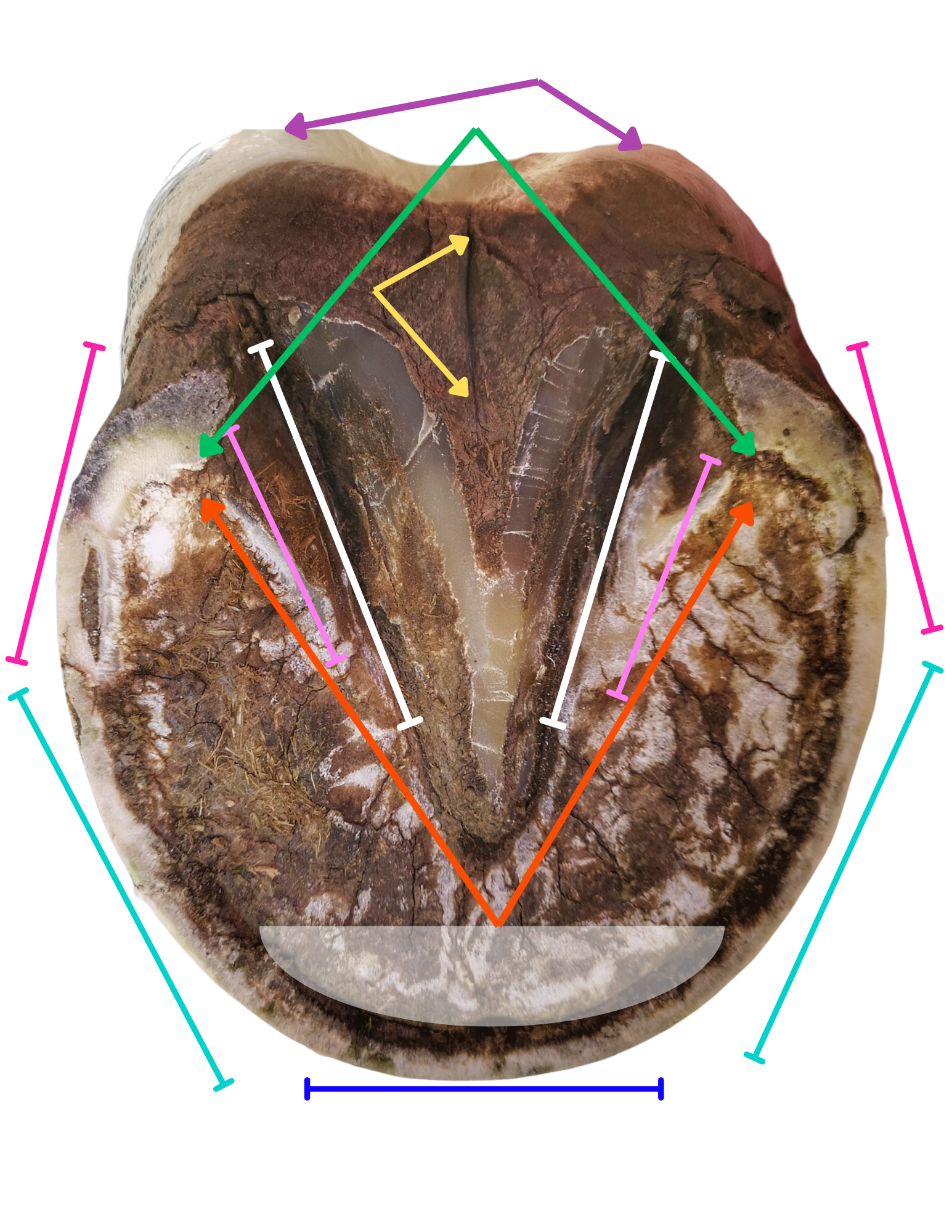
The Frog
The most distinctive feature on the bottom of the hoof — a triangular, rubbery, slightly wedge-shaped structure pointing toward the toe. The frog compresses with every step to act as a natural pump, pushing blood back up the leg against gravity (crucial because horses have no muscles in their lower legs). It also absorbs shock and grips soft or slippery ground. Running down its centre is the central sulcus of the frog; the pointed front tip is the apex; the wider back portion is the base. On either side sit the collateral grooves.
The Sole
The flat, slightly concave (curved inward) surface making up most of the bottom of the hoof — extending from the white line on the outer edge to the bars and frog in the centre. A healthy sole is slightly dished. A flat or convex sole ('dropped sole' or 'flat foot') can signal hoof health problems. The sole is not meant to bear the horse's weight directly — that's the hoof wall and frog's job — so farriers take care not to trim it too aggressively.
The White Line
Despite its name, the white line isn't actually white — it's typically a pale yellowish or cream colour. It's the thin junction between the outer hoof wall and the inner sole, visible as a narrow strip around the inside edge of the wall on the underside. This is a critical landmark for farriers: horseshoe nails must stay safely outside the white line. A compromised white line can allow bacteria or fungi in, causing 'white line disease.'
The Bars
Extensions of the hoof wall that fold inward at the heels, appearing as two ridges angling from the heels toward the frog on the underside. They add structural support to the back of the hoof and provide a rear attachment point for the wall. Many farriers now advocate leaving the bars relatively intact, as over-trimming can compromise the hoof's overall integrity.
Parts of a Horse Hoof — Quick Reference Table
All 20 key hoof parts at a glance — perfect for studying, 4-H quizzes, and horse knowledge classes.
| Part | What It Is & Where to Find It |
|---|---|
| Hoof Wall | The hard outer shell of the hoof; divided into toe (front), quarters (sides), and heels (back) |
| Toe | The front-facing section of the hoof wall |
| Quarter | The side sections of the hoof wall, between the toe and heel |
| Heel | The back section of the hoof wall where it ends near the bulbs |
| Heel Buttress | The sturdy rear corners of the hoof wall at the heels, where the wall meets the bars — they bear significant weight and provide rear stability |
| Water Line | The inner, denser layer of the hoof wall visible on the underside, just inside the white line — thicker and harder than the outer wall, it helps protect the sensitive inner structures |
| Coronet Band | The soft growth zone at the very top of the hoof wall — this is where the hoof grows from |
| Periople | A thin, waxy layer just below the coronet band that seals in moisture |
| Bulbs of the Heel | Two soft, rounded pads at the very back of the hoof; shock absorbers |
| Frog | Triangular, rubbery structure on the underside; aids circulation and shock absorption |
| Frog Apex | The pointed front tip of the frog |
| Base of Frog | The wider, rear portion of the frog near the heels |
| Central Sulcus | The deep groove that runs down the very centre of the frog from back to front — also called the central cleft; can collect debris and is a common site for thrush if not kept clean |
| Collateral Grooves | The grooves on either side of the frog, between frog and hoof wall |
| Sole | The slightly concave bottom surface of the hoof; not meant to bear direct weight |
| Toe Callus | A thickened, hardened area of sole at the toe region — a natural protective layer that develops with barefoot horses and should not be over-trimmed |
| Seat of Corn | The angle between the bar and the sole at the heel — a sensitive area where bruising (called a 'corn') can occur, often from ill-fitting shoes or stones |
| White Line | The pale junction between the hoof wall and the sole; critical for correct nail placement |
| Bars | Extensions of the hoof wall that fold inward at the heels, adding rear structural support |
Why Healthy Hooves Matter
Every time a horse takes a step, their weight — often 900 to 1,200 pounds — passes through the hoof or hooves making contact with the ground. So it is crucial that that these structures are kept as healthy as possible. Understanding the parts of the hoof helps every horse lover understand horse hooves better and care/advocate for horses better.
Spot problems early
A hoof that looks different — a crack in the wall, a bruised sole, a contracted heel, or a shrinking frog — is often the first sign that something is wrong. Knowing what normal looks like helps you notice when things change.
Work with your farrier
When your farrier talks about the frog, bars, or white line, you'll know exactly what they mean — and you'll be able to ask better questions about your horse's hoof care.
Understand lameness
Many of the most common causes of lameness — laminitis, navicular disease, abscesses, thrush — involve specific parts of the hoof. Understanding the anatomy helps you understand the diagnosis.
Care for hooves day to day
Daily hoof picking isn't just about cleanliness — it gives you a chance to check the frog for signs of thrush, look for pebbles wedged in the collateral grooves, or catch a loose shoe before it causes damage.
Succeed at horse shows and 4-H
Many youth horse programs include horse knowledge classes where you'll be asked to identify external parts of the horse including the hoof. Knowing your stuff pays off in the ring!
Frequently Asked Questions
Everything you ever wanted to know about horse hooves — answered.
The main external parts of a horse hoof are the hoof wall (divided into the toe, quarters, and heels), the coronet band, the periople, and the bulbs of the heel. On the underside (solar surface), the key parts are the frog, the sole, the white line, the bars, and the cleft and collateral grooves of the frog.
The bottom of a horse's hoof is called the solar surface. It includes the sole (the large, slightly concave middle area), the frog (the triangular rubber-like structure in the centre), the white line (the junction between wall and sole), and the bars (extensions of the hoof wall that fold inward at the heels).
The frog is the triangular, rubbery structure on the bottom of a horse's hoof. Despite its unusual name, it has a very important job: it acts as a natural pump, compressing with each step to help push blood back up the horse's leg. It also absorbs shock and helps grip the ground. A healthy frog should be firm but slightly pliable, and it should make contact with the ground when the horse stands on a normal surface.
The white line is the pale, cream-coloured junction between the outer hoof wall and the inner sole, visible when looking at the underside of the hoof. It's a critical landmark for farriers because horseshoe nails must be placed strictly outside the white line — placing a nail too far inward could enter the sensitive laminae and cause severe pain or infection. White line disease is a condition where fungi or bacteria break down this junction.
The coronet band (also called the coronary band) is the soft, fleshy band at the very top of the hoof wall where the skin of the leg meets the hoof. It is the growth zone of the hoof — the entire hoof wall grows downward from the coronet band, similar to the way a fingernail grows from its base. A healthy coronet band is slightly warm and pliable. Injuries to the coronet band can disrupt hoof growth and cause permanent changes to the hoof wall.
A horse's hoof grows approximately ¼ to ⅜ of an inch per month, meaning it takes roughly 9 to 12 months for a completely new hoof wall to grow from the coronet band all the way to the ground. Growth rate varies by season (faster in spring and summer), diet, and the individual horse. This is why most horses need their hooves trimmed (and if wearing horseshoes reshod) every 4 to 8 weeks.
Yes! We have one available on our Etsy store.
Let's Connect on Socials!





You might like these
Favorite Horse Breeds
Learn about different horse breeds and share your favorites! If we missed a horse breed be sure to let us know.
Horse Science Fair Projects
Looking for fun horse science fair projects? Here are some ideas shared by horsecrazygirls!
Pony Breeds
Everything you ever wanted to know about ponies and the different breeds.
Horse Quizzes
Find lots of fun horse quizzes and horse trivia questions here!
Horse Trivia
Test your horse trivia knowledge with over 10 different horse trivia quizzes to test your horse knowledge!
Horse Knowledge
Here you will find articles and resources to help you increase your horse knowledge!
Awesome horse word search games!
Play our horse word search games created by a horsecrazy girl! Free horse word search games for horse lovers
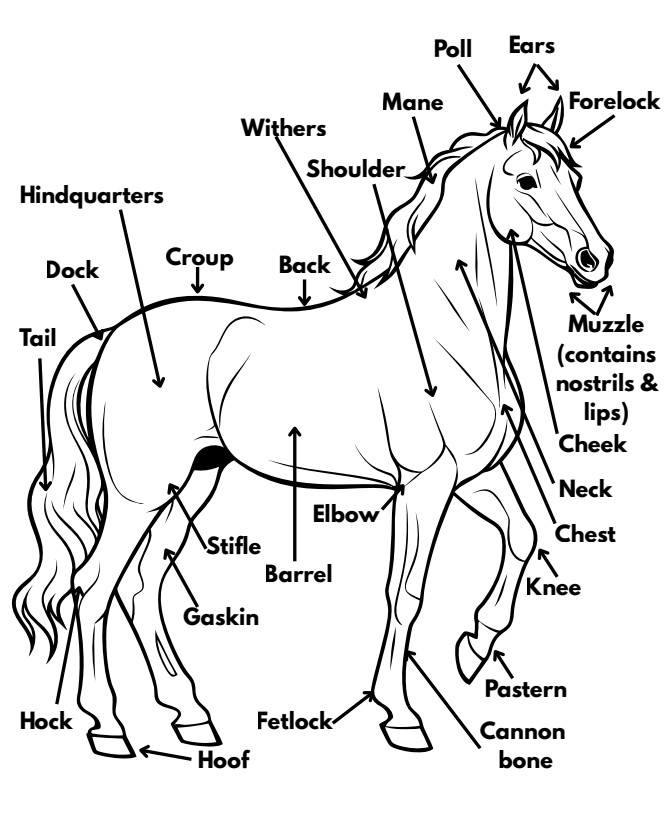
Parts Of The Horse
Free interactive parts of the horse games to help you learn horse anatomy!





Community
Games & Fun
Explore
© 2007–2026 HorseCrazyGirls — All Rights Reserved ·
Privacy / Terms ·
Affiliate disclosure: As an Amazon Associate, we earn from qualifying purchases.